
"Central America coffee market"
1000 article(s) found

Yega snow caffeine was a traditional sunbathing method until 1972, when the water washing technology of Central and South America was introduced.
Professional coffee knowledge exchange more coffee bean information Please follow the coffee workshop (Wechat official account cafe_style). That means coffee is produced in the small town of Yega Chefe, but without Yega Chefe flavor, how can it be like this? It's like going to Nantou to buy Alishan-flavored tea, but buying it without the expected taste, which is confusing because most people only

A brief introduction to the Market Price of Fine Coffee Bean varieties in Happy Manor with fragrant flavor
Nicaragua is now one of the poorest countries in Central America. Due to its poor economic foundation, the coffee industry is still relatively backward, while coffee farmers are in extreme poverty. Fortunately, Nicaraguan coffee has received some foreign aid funds to improve the quality of its coffee. Coffee from Madagelba, Sinodega and Segovia in Nicaragua
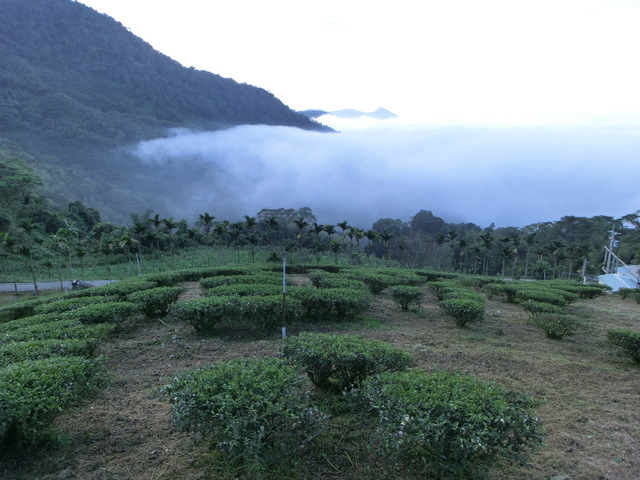
China Coffee Network recommends coffee bean producing area-Central America-Honduras (Honduras) washed bourbon
Well-known representative coffee: Honduran coffee seems strange to many coffee drinkers. When it comes to coffee production, the geographical conditions of Honduras are no less than those of neighboring coffee-producing countries such as Guatemala and Nicaragua. However, in the past, Honduras was more well-known in the consumer market because it did not have strong support in the handling and transportation of raw beans.

The Cultural History of Coffee in South America
[Colombia] is the world's second-largest coffee producer, accounting for about 12% of the world's annual output, which is much lower than Brazil's 30% to 35%, but most of them are high-quality mountain-washed beans. Central Colombia is divided into valleys by three north-south longitudinal mountains, of which the central and eastern mountains are the main coffee producing areas. The coffee here is named after the distributed market

A brief introduction to the Market Price of Fine Coffee Bean varieties in Ireta Manor, Panama
Panama has one of the highest volcanoes in Central America: Mount Baru. The Baru volcano has an altitude of more than 3474 meters, and the surrounding land is nutritious and balanced, providing sufficient conditions for the sowing and cultivation of Panamanian coffee. The cold air stream converges and flows above 2262 meters in the Central Mountains, thus creating more and more in the Bouquete and Volcan regions.

Aromatic pure Salvador Everest fine coffee bean varieties planting market price profile
As in Guatemala and Costa Rica, coffee in El Salvador is graded according to altitude, with the higher the altitude, the better the coffee. There are three grades according to altitude: SHB (strictly high grown)= high, HEC (high grown central)= medium high, CS (central standard)= low; the best brand is Pipil, which is Aziz

The Development of Coffee beans Coffee History of South America
[Colombia] is the world's second-largest coffee producer, accounting for about 12% of the world's annual output, which is much lower than Brazil's 30% to 35%, but most of them are high-quality mountain-washed beans. Central Colombia is divided into valleys by three north-south longitudinal mountains, of which the central and eastern mountains are the main coffee producing areas. The coffee here is named after the distributed market

Pure, slightly sour Manor Renas in El Salvador, the cultivation of boutique coffee beans, geographical location and climate
Features of Salvadoran coffee: Salvadoran coffee is a specialty of Central America, where coffee is light, fragrant, pure and slightly sour. Flavor: balanced taste, good texture recommended roasting method: medium to deep, there are many uses ★: general Salvadoran coffee market: the best quality Salvadoran coffee is exported from January to March, 35% of the extra hard beans are exported to Germany. nineteen
A detailed introduction of the coffee production areas of Costa Rica on behalf of coffee from Central America.
For the exchange of professional baristas, please follow the Coffee Workshop (official Wechat account cafe_style). There are seven countries in Central America, namely, Belize, Costa Rica, El Salvador, Guatemala, Honduras, Nicaragua and Panama. All seven countries in Central America produce coffee, among which Guatemala, Costa Rica and Honduras are global coffee exporters.

A brief introduction to the planting Market Price of El Salvador Pacamara Fine Coffee Bean varieties
The best place to produce the coffee is in western El Salvador, adjacent to Santa Ana, which is close to the border with Guatemala. Parkmara coffee is full-grained, and when the aroma is not too strong in El Salvador, the coffee beans rich in the Kuskabapa region are the best, slightly lighter, fragrant, pure and slightly sour. Like Guatemala and Costa Rica, El Salvador

A brief introduction to the Market Price of Fine Coffee Bean varieties in Ireta Manor
Panama has one of the highest volcanoes in Central America: Mount Baru. The Baru volcano has an altitude of more than 3474 meters, and the surrounding land is nutritious and balanced, providing sufficient conditions for the sowing and cultivation of Panamanian coffee. The cold air stream converges and flows above 2262 meters in the Central Mountains, thus creating more and more in the Bouquete and Volcan regions.

Introduction to the characteristics of the taste manor of Costa Rican boutique coffee
Costa Rica's economy, mainly tourism, agriculture and exports of electronic components, has grown rapidly since the recession in 1997. Costa Rica is located in the strip of Central America and in the center of the Americas. It has direct access to Eurasia and has easy access to the American market.

[coffee producing area] the "unpopular" top coffee production in Central America-is Honduran coffee good?
Professional coffee knowledge exchange more coffee bean information please follow the coffee workshop (Wechat official account cafe_style) Honduran coffee have you tasted? Honduras, a country in Central America, is particularly unpopular among many Central American coffee-producing countries because it has not established diplomatic relations with China. But as you may not know, since 2011, Honduran coffee

Characteristics of Central American producing areas | famous boutique coffee producing area of Tarazu Coffee, Costa Rica
Professional coffee knowledge exchange more coffee bean information please follow the coffee workshop (Wechat official account cafe_style) front street-Costa Rica Tarazu introduction Costa Rica is located in the low latitudes of Central America, the central plateau and mountains about 800 to 2000 meters above sea level. The climate here has two obvious dry and wet seasons. The harvest period is from November to March of the following year, which coincides with the dry season.

Panamanian Coffee, the King of Coffee Price ratio in Central America
Growing environment Panama is a small country located in the center of the American continent. The waters of the Atlantic and Pacific oceans flood its beaches. Panama is located at 9 degrees north latitude, the confluence of the mountains, where Mount Baru, one of the highest volcanoes in Central America, is located. The Baru volcano has an altitude of more than 11400 feet, and the land around it is rich in nutritious and fertile soil for Bana.

Coffee Culture the protagonist of the coffee myth in Latin America, Central America and the Caribbean
When it comes to Jamaica, we immediately heard that "Blue Mountain" coffee is a rare and expensive true blue bean, which originated from Wallensford Cafe, but now the production area has been expanded to the Blue Mountain Mountains where the altitude is more than 1000 meters. As long as the tree species and treatment procedures of the manor meet certain standards, the government will issue a guarantee to allow the use of the name "Blue Mountain".
Introduction of major coffee producing areas in the world Central and South American coffee beans, African coffee beans, Asian coffee beans
[introduction] Coffee comes from coffee beans, which are harvested and processed from the fruit of trees. Coffee trees grow at the center of the equator, between latitudes of 25 degrees south and north, and are called coffee belts in the homes of tropical or subtropical countries. at present, raw coffee comes from coffee beans, which are harvested and processed from the fruits of the trees. Coffee trees grow at the center of the equator.

Coffee in South America
[Colombia] is the world's second-largest coffee producer, accounting for about 12% of the world's annual production, although much lower than the 30 to 35% of Brazil, most of which are high-quality alpine washed beans. Central Colombia is divided into several valleys by three north-south vertical mountains, of which the central and eastern mountains are the main coffee producing areas. Coffee here is named after the market of distribution,
Coffee History of South America
[Colombia] is the world's second-largest coffee producer, accounting for about 12% of the world's annual production, although much lower than the 30 to 35% of Brazil, most of which are high-quality alpine washed beans. Central Colombia is divided into several valleys by three north-south vertical mountains, of which the central and eastern mountains are the main coffee producing areas. Coffee here is named after the market of distribution,

The best balance of El Salvador Everest fine coffee bean varieties planting market price profile
Salvadoran coffee is tied with Mexico and Guatemala as the producer of Asa and Meldo, and is competing with other countries for the top one or two places in Central America. Highland origin, for the size of large coffee beans, fragrant taste mild. As in Guatemala and Costa Rica, coffee in El Salvador is graded according to altitude, with the higher the altitude, the better the coffee.